
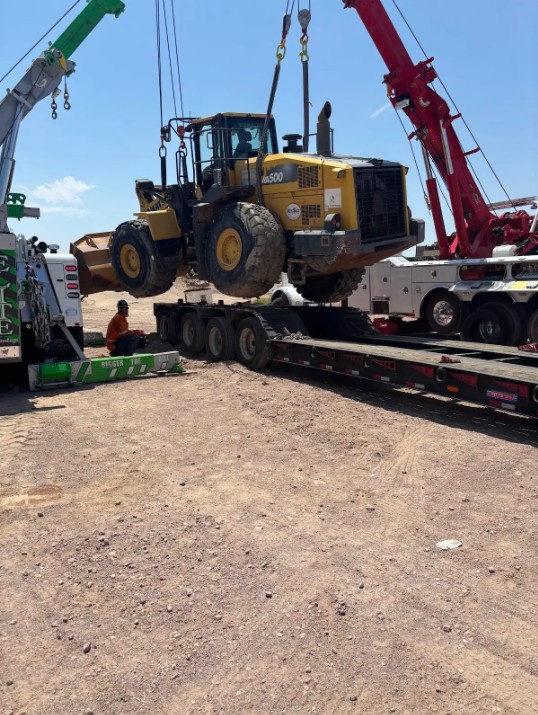
When a semi truck goes over, gets stuck at an angle, or ends up in a position where a straight pull would cause more damage than it solves, the standard tow truck is not the right tool. That is when someone calls for a rotator.
Most truckers and dispatchers have heard the term but may not know what a heavy duty rotator tow truck actually does or why it exists. This article explains the equipment, the situations it handles, and what a recovery looks like from the moment of the call to the moment the truck is back on the road.
What Is a Rotator Tow Truck?
A rotator is a heavy-duty recovery vehicle with a crane-style boom that can swing a full 360 degrees, allowing it to lift, position, and set down heavy loads from any approach angle.
A standard wrecker works by pulling. It hooks to the disabled vehicle and drags or tows it in a relatively straight line from behind. That works well for the majority of breakdowns where the truck is on the road and accessible from the rear.
A rotator works differently. The boom can rotate all the way around, reach out over obstacles, extend at various angles, and apply controlled lift rather than drag. This means the operator can approach a truck from the side, from above a slope, or from a position that a standard wrecker would never be able to reach, and apply lifting force precisely where the recovery requires it.
What makes a rotator distinct:
- Full 360-degree boom rotation, allowing approaches from any direction
- Crane-style lift rather than straight pull
- Controlled load placement that sets the recovered unit down where it needs to go
- Outriggers that stabilize the rotator itself during heavy lifts
- Reach capacity that extends over barriers, embankments, and obstacles
This combination of rotation, reach, and controlled lift is what separates a rotator from every other piece of towing equipment.
What Does the 50-Ton Rating Mean?
The ton rating on a rotator refers to its lifting capacity. A 50-ton rotator can handle up to 50 tons of load on the boom.
A fully loaded Class 8 semi truck with a loaded trailer puts significant combined tonnage on the boom during a lift. The 50-ton capacity means the rotator handles even the heaviest legal combinations without reaching the limits of the equipment. This matters in recovery situations because you are often lifting a loaded unit, not an empty one, and the load does not disappear just because the truck rolled over.
A 35-ton wrecker handles standard heavy towing and lighter recovery situations where the load and positioning requirements fall within its capability. The rotator steps in when the recovery requires more lifting capacity, an approach angle the wrecker won’t be able to manage, or a controlled placement that a straight pull won’t achieve.
In practical terms, if the truck is accessible and the recovery is a tow, the wrecker handles it. If the truck is overturned, stuck on a slope, or needs to be lifted from an angle, the rotator is the right call.
Situations That Require a Heavy Duty Rotator Tow Truck
Certain recovery scenarios won’t be resolved with standard equipment, and attempting them with the wrong tool makes the situation worse.
Overturned Semi Trucks and Trailers
An overturned truck requires the vehicle to be lifted and rotated back onto its wheels or onto a recovery surface in a controlled way. A standard wrecker pulling from one point won’t accomplish this without risk of dragging the cab or trailer across the road and adding damage. The rotator’s boom reaches over the overturned unit, attaches rigging at the correct points, and brings the truck upright in a controlled sequence.
Off-Road and Embankment Recovery
When a truck leaves the road and goes down an embankment, the approach angle changes everything. Standard towing equipment sits on the road and pulls from that single position. The rotator’s boom can extend out over the edge, reach down to the vehicle, and lift it back up rather than dragging it along the slope.
Loaded Container and Flatbed Recovery
A flatbed that has shed its load or a container unit that has shifted on the trailer requires careful lifting rather than pulling. The rotator allows the operator to apply lifting force to specific attachment points rather than dragging the unit across the surface and causing further damage to cargo or the trailer.
Stuck or Jackknifed Combinations
A jackknifed combination sitting across multiple lanes or wedged against a barrier presents a geometry problem for standard recovery equipment. The rotator’s rotation capability allows the operator to approach the recovery from the most effective angle and separate or reposition units without requiring multiple tow trucks to coordinate from different positions.
What a Rotator Recovery Actually Looks Like
From the driver or dispatcher’s perspective, a rotator recovery is a methodical process that starts with assessment and ends with the truck and load repositioned safely. Submitting a service request with accurate situation details before the team departs gets the right equipment and rigging in motion from the start.
The recovery team arrives, assesses the position of the truck, the surface conditions, and the load situation before any rigging goes on. This assessment determines where the rotator positions are, where outriggers go, and how the lift sequence proceeds. Rushing that phase leads to problems.
Once the rotator is positioned and stabilized, the boom is extended to reach the recovery points on the overturned or stuck vehicle. Rigging is attached at the correct attachment points on the frame or axles, not on whatever is convenient. The lift then happens in a controlled sequence, with the operator managing the rotation and extension together to bring the truck to the right position without swinging the load or losing control of the placement.
After the truck is righted or repositioned, the assessment continues: can the truck be driven out, or does it need to be towed? If it needs to be towed, that determination happens right there.
Simultaneous Truck-and-Trailer Tow
A meaningful advantage in heavy recovery is handling the tractor and trailer as one operation rather than two separate runs.
When a recovery requires two independent tow trucks, one for the tractor and one for the trailer, the timeline and coordination requirements double up. A 50-ton rotator working alongside a 35-ton wrecker gives a heavy duty rotator tow truck team the capacity to recover and tow both units together in a single coordinated operation.
For a driver waiting roadside and a dispatcher tracking a freight commitment, reducing the number of recovery runs changes the total time the situation takes to resolve. Both units leave the scene together rather than the trailer sitting on-site waiting for a second dispatch.
What to Tell the Dispatcher When You Need a Rotator
Getting the right equipment to a recovery scene starts with an accurate description of the situation when you make the call. The heavy duty towing team uses that initial information to determine whether a wrecker is sufficient or whether a rotator is the correct dispatch before leaving the yard.
Information that helps a recovery team respond correctly:
- Position of the truck: on the road, off the road, overturned, or jackknifed
- Whether the trailer is attached and whether it is loaded
- The surface the truck is on: pavement, dirt, slope, or ditch
- Any obstacles between the road and the truck: barriers, guardrails, vegetation
- Whether the truck is blocking traffic lanes
Calling in with that kind of detail means the team arrives prepared rather than needing to make a second equipment run after assessing on-site.

When the Right Equipment Is Already on the Way
Phoenix Heavy Towing and Repair operates both a 50-ton rotator and a 35-ton wrecker, covering the full range of heavy duty rotator tow truck and standard heavy recovery situations. The team handles overturned units, embankment recoveries, jackknifed combinations, and loaded container situations as part of regular operations.
When a situation requires a technician before or after the recovery, semi truck and trailer repair is available at the shop to address whatever the assessment reveals.
Frequently Asked Questions
What is the difference between a rotator and a standard wrecker?
A standard wrecker applies a pulling force from a fixed point, which works for vehicles that are accessible and need to be towed from their current position. A rotator has a crane-style boom that rotates a full 360 degrees, allowing the operator to approach from any angle, lift rather than drag, and place the recovered unit in a controlled position. The rotator handles situations where straight pulling would cause additional damage or simply won’t reach the vehicle.
When does a recovery situation require a 50-ton rotator specifically?
When the vehicle or load involved exceeds what a standard 35-ton wrecker can handle, or when the recovery requires a lift angle or approach direction the wrecker won’t manage. Overturned loaded trailers, off-road recoveries on slopes, and jackknifed combinations across multiple lanes are the most common situations where a 50-ton rotator is the correct equipment.
Can a rotator recovery be done without unloading the trailer first?
In many situations, yes. A 50-ton lifting capacity covers the load of a loaded trailer for most legal freight combinations. The decision depends on the load type, the position of the trailer, and the access the rotator has to proper rigging points. The recovery team makes that assessment on-site before rigging begins.
How long does a rotator recovery typically take?
Recovery time depends on the complexity of the situation: the position of the vehicle, surface conditions, load type, and how accessible the rigging points are. A straightforward upright recovery of an overturned unit under good conditions moves faster than a recovery from a steep embankment with obstacles. The assessment phase at the start of every recovery is what keeps the actual lift from taking longer than it should.
Can the truck and trailer be towed together after a rotator recovery?
Yes, in most situations where both units are intact and towable. Using a 50-ton rotator and a 35-ton wrecker together, the recovery team can handle the tow of both units in a single run rather than requiring separate trips for the tractor and trailer.