You slid off a shoulder. Maybe a drive axle sank into soft desert ground along I-10. Now you’re stuck and not sure what to call for. Most drivers in this situation describe what happened rather than asking for a specific service.
What you need is a winch out service. This article explains what that means, how the recovery works, and what to expect from the call to getting back on hard surface.
What Is a Winch Out
A winch out is a recovery operation using a cable or synthetic line to pull a stuck vehicle back onto solid ground. It’s different from a tow. A tow lifts and transports. A winch out extracts a vehicle stuck because of position, not because it’s broken.
What is a winch out in practical terms? It’s what happens when drives sink into soft ground, when you slide off a shoulder into a ditch, or when you’re high-centered and can’t get traction. The truck might run fine. It just can’t go anywhere until someone pulls it out.
When You Need a Winch Out vs a Tow
You need a winch out when: drives are buried in soft ground, the truck slid off pavement but isn’t damaged, you’re stuck on a shoulder without traction, or the trailer jackknifed into soft ground.
You need a tow when: the truck is mechanically disabled, there’s frame or suspension damage, or the truck can’t drive even after extraction.
Sometimes you need both. A heavy duty recovery might involve winching the truck out, then towing it if extraction revealed damage.
What the Operator Assesses on Arrival
A heavy duty winch out isn’t just hooking up and pulling. The recovery operator makes several decisions before rigging.
Ground conditions – Soft sand behaves differently than wet clay. Desert ground along I-8 can look solid but give way under load.
Vehicle position – Is the truck level or tilted? How deep are the drives buried? A tilted truck changes pull angle and stress distribution.
Load status – Has cargo shifted? A shifted load changes center of gravity and can make extraction dangerous.
Anchor points – The wrong attachment point puts stress on components not designed for it. Frame rails and designated recovery points exist for a reason.
This assessment is why a tractor trailer winch out takes planning. Wrong rigging turns a recovery into a repair bill.
How Much Winch Capacity Do You Need
Drivers ask how much winch do you need for a stuck semi. The answer depends on resistance, not total weight.
A loaded Class 8 can weigh 80,000 pounds, but winch capacity is about overcoming resistance. Buried drives might require 30,000 to 50,000 pounds of pulling force. A truck barely off pavement needs less. Mud creates suction. Sand shifts.
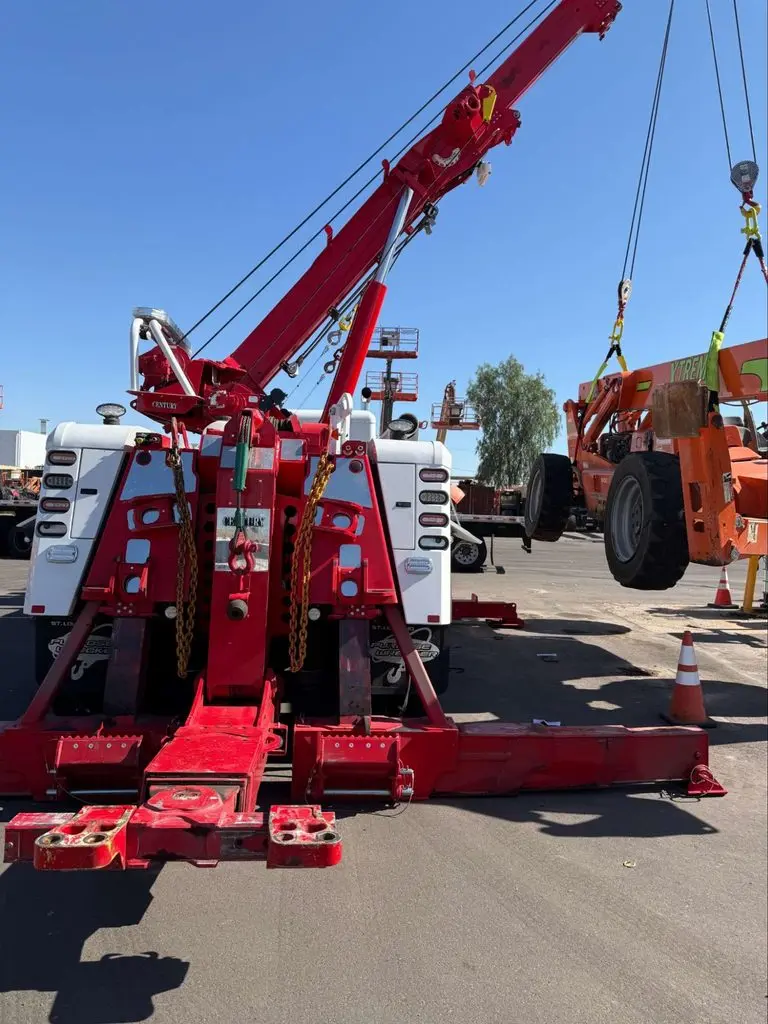
A 35-ton wrecker provides enough pulling power for most extractions. A 50-ton rotator adds lift and positioning capability for tilted trucks or complex angles.
What winch should I get? For semi recovery, you need commercial-grade equipment. A pickup-mounted winch won’t extract a buried tractor.
Should Winch Pull From Top or Bottom
Should winch pull from top or bottom when extracting a stuck truck?
Low angle pulls work when the truck is stuck but level. The line runs horizontal, pulling the truck forward or backward along the ground.
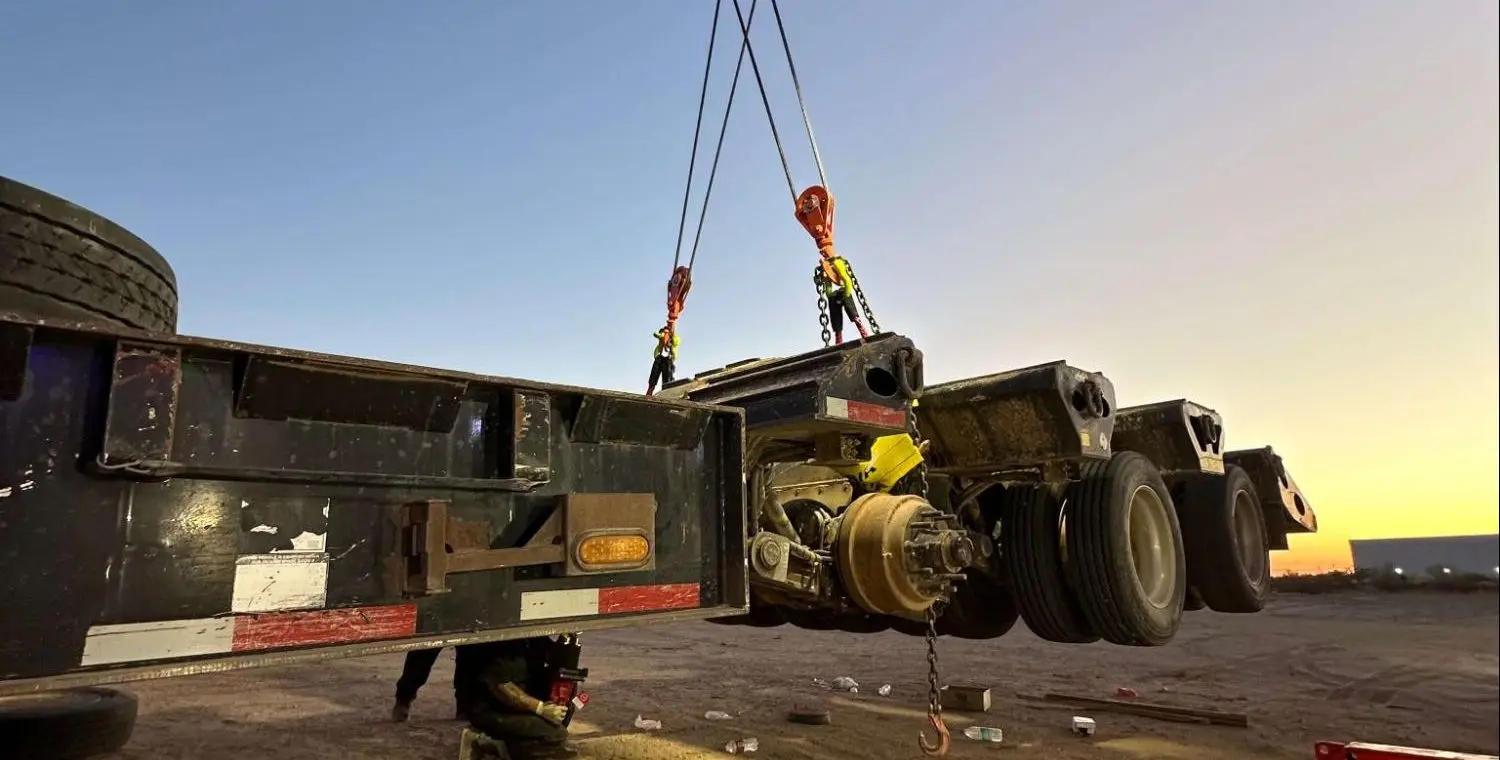
High angle pulls use a rotator to pull from above. This helps when the truck is buried deep or when lifting the stuck end breaks suction.
A truck with its front in a ditch might need an upward pull to lift the nose. A truck stuck on flat ground usually works better with a horizontal pull. Having both options lets the operator choose what fits.
What Happens During the Recovery
Once assessment is complete, the heavy duty towing and recovery process follows a sequence.
Positioning – The wrecker or rotator needs solid ground to work from, sometimes approaching from an angle.
Rigging – Chains, straps, or cables attach at designated points matching the pull direction.
Tensioning – Before full power, the operator applies gradual tension to confirm rigging is secure.
The pull – Power increases until the truck breaks free, sometimes requiring repositioning.
Post-extraction check – A quick inspection confirms no damage occurred during recovery.
Why Wrong Rigging Causes Problems
Bad pulls cause damage. This is why assessment matters.
Wrong attachment points – Pulling from a bumper instead of frame rails can rip it off. Pulling from suspension components bends them.
Wrong angle – A pull too low drags the front axle into ground. Too high on an unstable truck can roll it.
Too much force too fast – Shock loading stresses everything at once. Controlled force lets the truck break free safely.
A proper winch out anticipates these problems and plans the pull to avoid them.
What Winch Out Service Cost Depends On
Drivers wonder about winch out service cost. Pricing varies based on how stuck you are, equipment required, location, and time involved.
A truck barely off pavement costs less than one buried axle-deep. A basic winch out costs less than one requiring a rotator. Remote locations along I-10 or I-8 take longer to reach.
How much winch cost is the wrong question. The right question is whether the recovery outfit has equipment and experience to get you out without causing damage.
Getting Your Truck Back on Solid Ground
Phoenix Heavy Towing and Repair provides winch out and recovery services throughout Buckeye, Gila Bend, Quartzsite, and the Phoenix metro area. We run a 50-ton rotator and 35-ton wreckers for Class 7 and 8 trucks along I-10 and I-8.
Contact us when you need a winch out done right.
Frequently Asked Question
What is the difference between a winch out and a tow?
A winch out extracts a stuck vehicle using cable to pull it onto solid ground. A tow lifts and transports a disabled vehicle. You need a winch out when the truck runs but can’t move due to position. You need a tow when the truck is mechanically disabled.
How long does a semi truck winch out take?
Time varies based on conditions. A straightforward extraction might take 30 minutes to an hour. A truck buried deep or requiring repositioning can take several hours.
Can a winch out damage my truck?
Yes, if done incorrectly. Wrong attachment points, bad angles, or too much force damages bumpers, frames, and suspension. Proper assessment and rigging prevents damage.
What equipment is needed for a heavy duty winch out?
A 35-ton wrecker handles most extractions. A 50-ton rotator adds lift capability for complex situations. Pickup-mounted winches lack capacity for Class 7 and 8 trucks.
What should I tell the dispatcher when I call?
Describe your location, what happened, what you’re stuck in, and whether the load shifted. Mention if the truck is tilted. This helps dispatch send the right equipment.