
You’re rolling down I-10 through Arizona, and suddenly something’s wrong. Your truck’s going down, and you need to make the right calls fast. The first ten minutes after a semi truck breakdown Arizona can make the difference between a manageable problem and a dangerous one.
Arizona highways aren’t like breaking down anywhere else. The heat alone can turn a bad situation worse in a hurry. Stretches of I-10 and I-8 where you might not see another truck stop for 50 miles. And if you’re stuck in summer between Phoenix and Quartzsite, temperatures can hit 120 degrees.
Here’s what you need to do, step by step.
Get Your Rig to Safety First
The second you realize something’s seriously wrong, get off the travel lane. Don’t try to nurse it to the next exit if you’re losing power. A breakdown on the shoulder beats blocking traffic.
Get to the shoulder safely, hazards on, as far right as possible. If your truck dies in a travel lane, get hazards on and call for heavy-duty towing immediately.
Set Up Your Warning Devices the Right Way
Once you’re stopped, make your truck visible. Arizona highways have long, straight stretches where traffic moves fast. Drivers need to see your rig from way back.
Standard triangle setup:
- One triangle, 10 feet behind your truck
- One triangle, 100 feet behind your truck
- One triangle, 200 feet behind your truck
If you’re on a curve or hill where visibility’s limited, move that furthest triangle back even more. Setting up triangles in 115-degree heat isn’t fun, but it’s necessary. Get it done fast and get back to your truck.
Who to Call and What to Say
You’ve got a specific order for making calls, and what you tell people matters.
Call your dispatcher first if you’re a company driver. Give them your exact location – mile marker, highway, nearest town. Don’t guess.
Call for roadside assistance or towing next. You need someone who handles Class 7 and 8 trucks and knows Arizona highways. This isn’t a job for light-duty services. You need 24/7 roadside assistance that can dispatch to remote desert locations.
Have this information ready:
- Your exact location (highway, mile marker, direction)
- What’s wrong with the truck
- Whether you’re safe on the shoulder or blocking traffic
- If you’re pulling a loaded trailer, what type
The more specific you are, the faster help gets there with the right equipment.
The Arizona Heat Factor
This is what separates Arizona breakdowns from everywhere else. The heat isn’t just uncomfortable – it’s dangerous. If you’re broken down in summer between 10 AM and 6 PM, you’re dealing with extreme conditions.
Stay with your truck unless there’s an immediate safety reason to leave. Walking along the highway in 115-degree heat is a fast track to heat exhaustion. Your cab has shade.
But here’s the problem: without AC, your cab turns into an oven fast. Crack your windows for airflow, but don’t open them all the way near heavy traffic.
Drink water if you have it. Not coffee, not energy drinks – water. Always carry at least a gallon of water per person when running on Arizona highways.
Watch for heat problem signs: dizziness, confusion, nausea, or if you stop sweating when it’s hot. If you start feeling off, call for help immediately and tell them you’re dealing with heat issues.
When to Stay In vs. Get Out
This is a judgment call based on your specific situation.
Stay in your cab if:
- You’re safely on the shoulder with good visibility
- Traffic is moving fast and heavy
- The temperature outside is extreme
- Help is already on the way
Get out and move away if:
- You smell fuel or see smoke
- Your truck is partially in a travel lane
- You see another vehicle coming, and they clearly don’t see you
If you exit, get out the passenger side away from traffic. Don’t walk along the roadway. Get behind the guardrail or move well off the shoulder.
What Not to Do
Don’t try to diagnose complex problems at the roadside in extreme heat. Don’t accept help from random motorists beyond calling for assistance. Don’t abandon your truck to walk unless it’s very close and safe.
Arizona Highway Specifics
I-10 between Phoenix and California runs through a remote desert with spotty cell service. I-8 toward Yuma means serious heat with limited services. Know your route and check the cell signal before trouble hits.

Getting Back on the Road
Once help arrives, if the problem can be fixed safely at the roadside, that’s usually your best option. If the truck needs shop work, use a service with equipment to handle Class 7 and 8 trucks.
Be Prepared Before You Break Down
What you should have for Arizona runs:
- Extra water (at least a gallon)
- Working hazard triangles
- Charged phone with emergency numbers
- Basic route knowledge
Arizona’s tough on trucks, but knowing what to do in those first ten minutes can help you handle a breakdown safely.
Save This Number for Arizona Breakdowns
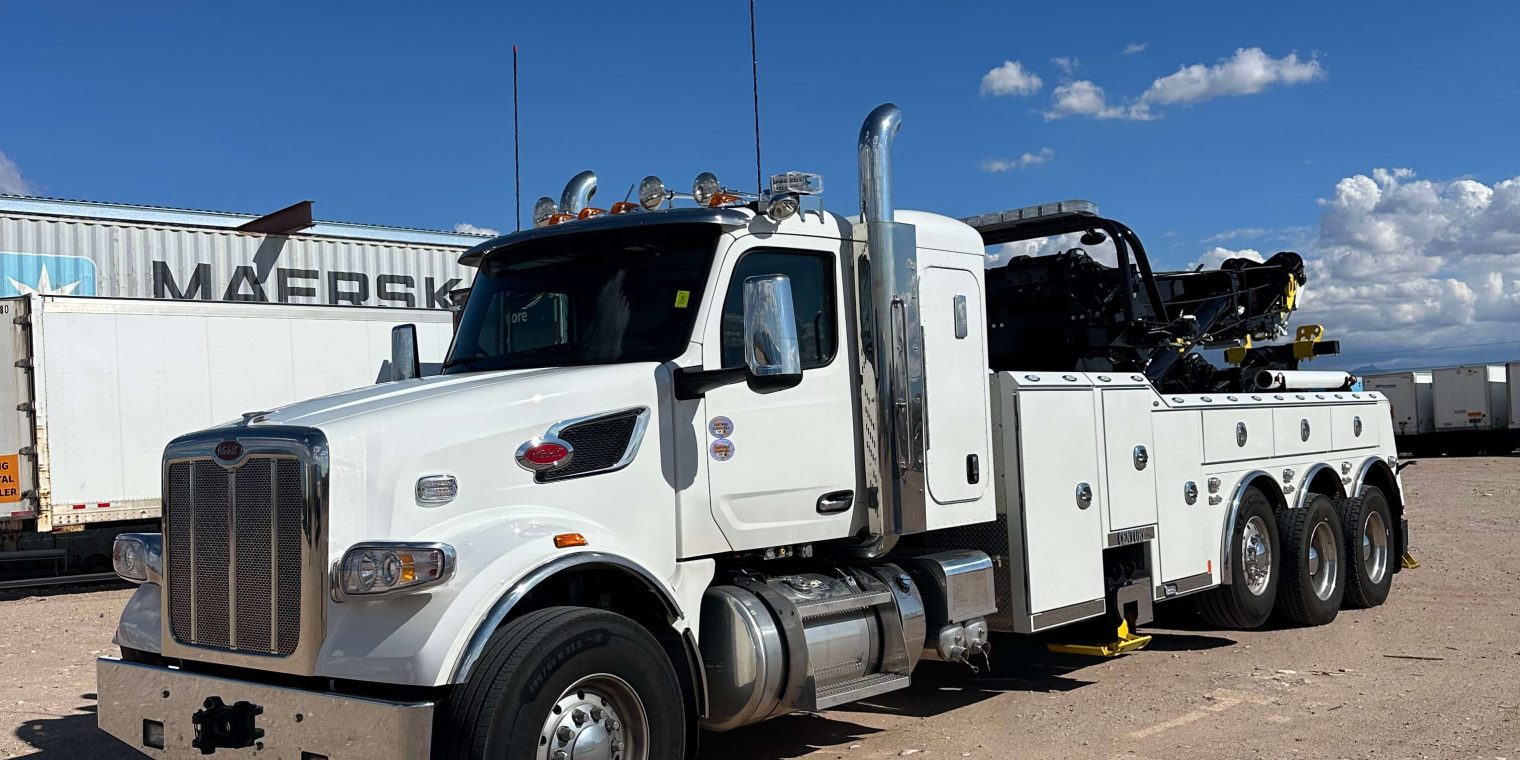
When you’re dealing with a semi truck breakdown Arizona, you need help that shows up with the right equipment. Phoenix Heavy Towing and Repair provides 24/7 roadside assistance across Arizona highways, including I-10, I-8, I-17, and remote desert routes.
We handle Class 7 and 8 trucks exclusively. Our mobile units respond to Buckeye, Gila Bend, Quartzsite, and everywhere in between with dealership-level diagnostic tools. Whether you need on-site repairs or transport to our Buckeye facility, we’re ready to respond.
Don’t wait until you’re stuck on I-10 in 115-degree heat to figure out who to call. Contact us to save our information now, or visit us to learn more.
Frequently Asked Questions
What should I do first when my semi-truck breaks down on an Arizona highway?
Get your truck to the shoulder safely if possible, turn on your hazards, and set up warning triangles. Then call your dispatcher, followed by roadside assistance.
How dangerous is the heat during an Arizona semi-truck breakdown?
Extremely dangerous in summer. Temperatures can exceed 115 degrees, and your cab becomes an oven without AC. Stay hydrated and watch for heat exhaustion symptoms like dizziness or confusion.
Should I stay in my truck or get out after breaking down?
Stay in your cab if you’re safely on the shoulder with good visibility. Exit only if you smell fuel, see smoke, or your truck is blocking traffic lanes. Use the passenger side if exiting.
What information do I need when calling for help after a breakdown?
Have your exact location ready, including highway, mile marker, direction of travel, and nearest town. Explain what’s wrong, whether you’re blocking traffic, and if you’re pulling a loaded trailer.
Can mobile repair services fix my truck on Arizona highways?
Yes, qualified mobile services can handle many repairs at the roadside, including air leaks and electrical issues. However, repairs requiring shop equipment will need towing to a proper facility.