
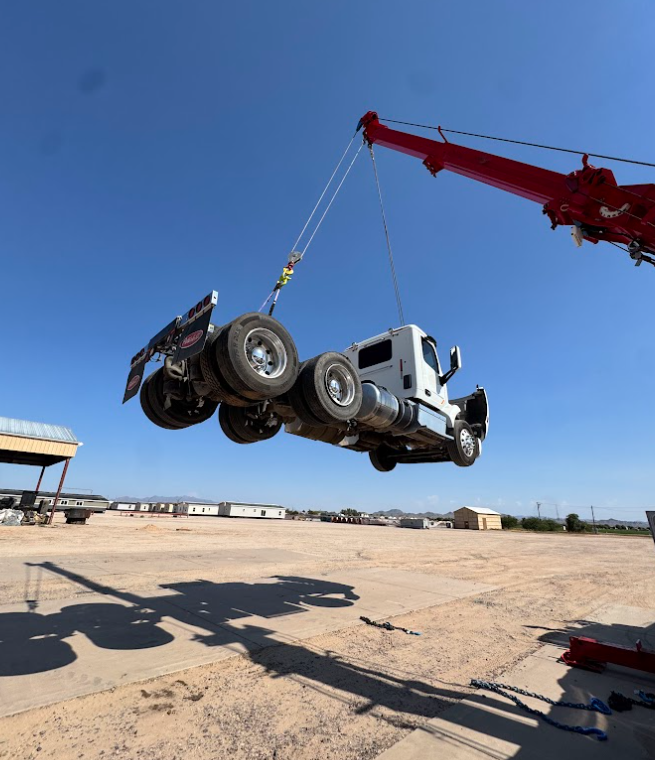
Arizona is one of the most heavily traveled freight states in the country. Thousands of commercial trucks push through every single day, hauling loads across I-10, I-17, I-8, and the remote desert stretches in between. And with that kind of volume, breakdowns happen, whether you are a seasoned over-the-road driver or running your first solo haul through the Southwest.
What separates a minor delay from a full-day ordeal usually comes down to one thing: knowing what to do next. A truck breakdown in Arizona hits differently than one in other parts of the country. The terrain is remote, the heat can be severe, and service availability varies widely depending on exactly where you stop. This guide covers all of it, so you are not figuring it out from the shoulder of a desert highway.
First Steps for Any Arizona Truck Breakdown
No matter where in the state your truck stops, the first few minutes follow the same playbook. Getting these right sets the foundation for everything that comes after.
Your first move is securing your position. Get as far off the travel lane as the road allows, activate your hazard lights, and place your warning triangles behind the rig. After that, assess whether the truck is in a safe spot or whether you need to move further from traffic.
Once you are secure, gather the information you will need before making calls:
- Your mile marker or nearest exit number
- A clear description of what the truck is doing or showing on the dash
- Your VIN, make, model, and engine type
- Whether the trailer is attached and loaded
Having all of that ready before you dial saves back-and-forth time and gets help moving your direction faster. The clearer your report, the quicker the dispatch.
Arizona’s Major Trucking Corridors: What to Expect
Arizona’s highway network runs through some of the most varied terrain in the Southwest. Understanding the character of each corridor helps you know what kind of situation you are dealing with.
I-10: The Main East-West Spine
I-10 is the busiest commercial route in Arizona, running from the New Mexico border all the way through Phoenix and out toward the California state line. The Phoenix metro stretch gets solid service coverage. West of Phoenix through Buckeye, Tonopah, and out toward Quartzsite, the gaps between service providers grow wider. The further west you travel past Quartzsite, the more remote things get.
I-17: The North-South Corridor
I-17 runs north from Phoenix through the high country. Elevation changes on this route are dramatic, and trucks can experience issues tied to temperature swings and the strain of long mountain grades. Phoenix-side coverage is strong. The further north you travel from the metro, the more critical it becomes to have a contact already saved before you need it.
I-8: The Southern Desert Route
I-8 cuts west from Casa Grande through Gila Bend and out toward the California border. This is a long, hot, and genuinely remote corridor. Gila Bend sits along this route and serves as one of the few service points between Phoenix and the California line. Drivers on I-8 should plan for limited options and longer response windows outside of the Phoenix area.
AZ-85 and US-60: Secondary Desert Routes
These routes connect the Phoenix metro to desert communities and border crossings. A truck breakdown in Arizona on these secondary roads typically means longer response windows, so having your contacts organized before you leave the metro area is worth doing.
Phoenix Metro Breakdown: Faster Help, More Options
If your truck stops anywhere within the Phoenix metro, including Buckeye, Laveen, Goodyear, Avondale, or Glendale, your situation is relatively favorable. Heavy commercial service providers operate throughout this area, and response times are noticeably shorter than in rural parts of the state.
The Buckeye corridor along the western stretch of I-10 is particularly well-covered for Class 7 and 8 trucks. Shops based there handle everything from electrical diagnostics and DEF system work to full drivetrain repairs. Major jobs can often move quickly when parts are available, which puts you in a much better position than waiting weeks at a dealership.
One thing to avoid in the metro: calling a general roadside or consumer towing company when you need commercial truck help. The Phoenix market has plenty of light-duty operators, and getting routed to one wastes time you do not have.
Rural Arizona Breakdown Challenges
Breakdowns in rural Arizona are a different situation entirely. Locations like Salome, Brenda, Tonopah, Quartzsite, Congress, Wickenburg, and Gila Bend are real trucking territory, and drivers stopped in those areas face specific challenges that metro drivers do not.
Response times are longer by geography, not negligence. A team dispatching from the Phoenix area will need real drive time to reach remote stops. Knowing this ahead of time helps you manage the situation and decide whether a roadside repair attempt makes sense or whether you should prepare for a longer wait for a tow.
Parts sourcing is another factor in remote locations. A job that moves quickly in a metro shop might take longer when a team has to pull components from a distributor far from your location. The services best suited for rural truck breakdown Arizona situations are the ones running mobile units that already carry common parts rather than relying solely on local suppliers.
What helps when you are stopped in a remote area:
- Pin your mile marker the moment you stop, before you move the truck
- Have water and supplies already in the cab before leaving populated areas
- Confirm your service contact covers your specific corridor before you need them
- Stay with the truck unless your safety requires otherwise
Heat and Weather: The Arizona Factor
Arizona’s weather is not a minor consideration for commercial drivers. Summer temperatures across the desert regularly push well past 100 degrees Fahrenheit, and that affects both the truck and the person waiting beside it.
DEF and aftertreatment systems are more vulnerable to heat-related stress in extreme conditions. Air system seals can wear faster under prolonged temperature extremes. Cooling systems work harder in desert climates in peak summer, which is one reason overheating-related issues are more frequent during Arizona’s hottest months than in most other parts of the country.
For the driver, roadside heat exposure is a genuine safety concern. Waiting on the shoulder in direct sun with no shade and no airflow in summer conditions can become dangerous faster than most drivers expect. That reality should factor into decisions about whether to stay roadside or whether moving to a rest area or truck stop is worth the effort.
Practical habits for every Arizona run:
- Keep drinking water in the cab on every trip through the state, not just in summer
- When waiting on repairs, position yourself in the shade whenever the situation allows
- Let your service contact know the conditions at your location, as heat affects certain repair approaches
Who to Call and What to Expect for a Truck Breakdown in Arizona
When you are stopped on an Arizona corridor, you need a service that works specifically with commercial trucks, covers the routes you travel, and handles both roadside and in-shop repairs without handing you off to a third party.
The right provider for a truck breakdown in Arizona should be able to cover all of this:
- Mobile dispatch with technicians carrying diagnostic software for your specific make
- The ability to assess roadside versus tow decisions based on real diagnostics, not guesswork
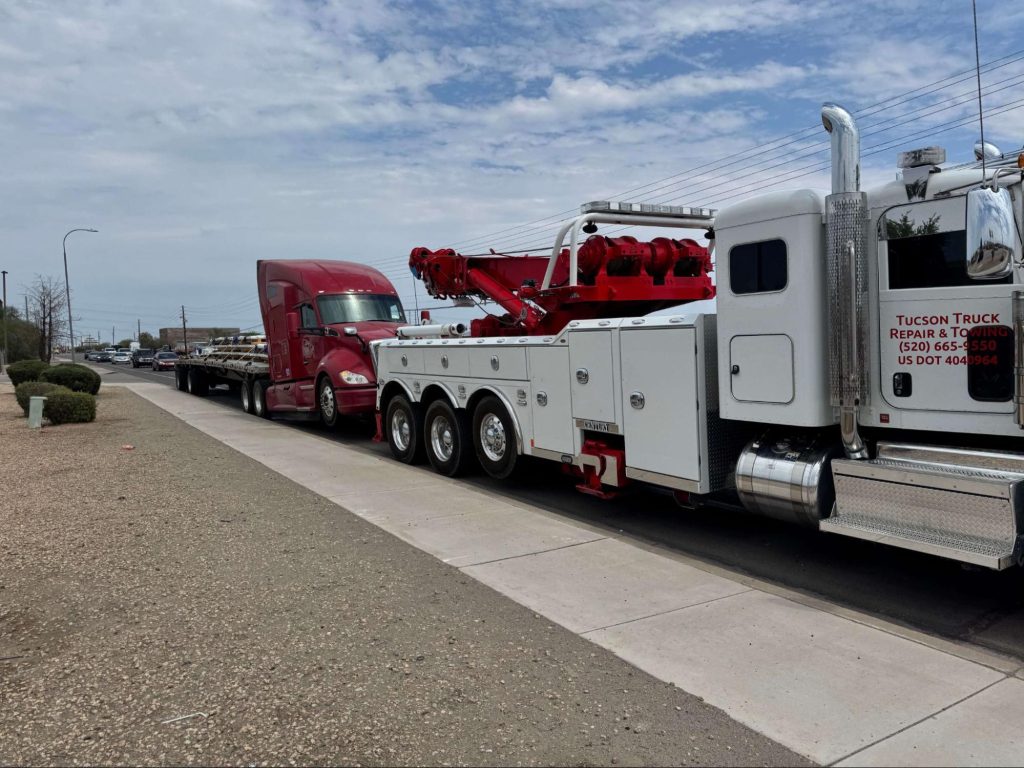
- Equipment capable of towing a truck and trailer together as a single unit
- In-shop capacity to continue the repair if the roadside scope cannot be completed on-site
When you call, expect questions. The team needs to know your location, your truck’s condition, and whether the trailer is part of the situation. The more specific your answers, the faster the right resources get moving.
Cover Your Arizona Route Before You Need It
Phoenix Heavy Towing and Repair runs heavy duty roadside assistance and heavy duty towing across Arizona’s major commercial corridors, with a full semi truck and trailer repair shop in Buckeye and towing operations based in Laveen. The team reaches drivers in the Phoenix metro, along the I-10 and I-8 corridors, through Gila Bend, Quartzsite, Wickenburg, Salome, and across the broader service area.
Save the contact before the route demands it. Submit a service request now or visit the site to learn more about coverage and services across the state.
Frequently Asked Questions
What should I do first if my truck breaks down on an Arizona highway?
Get off the travel lane, activate your hazard lights, and set out your warning triangles. Then collect your mile marker or nearest exit number, record what the truck is doing, and have your VIN and engine type ready before calling for help. Being organized before that first call saves meaningful time.
Is service available in rural parts of Arizona like Quartzsite or Salome?
Yes, though response windows in remote areas are longer than in the Phoenix metro. The services best equipped for rural Arizona coverage run mobile units into those corridors regularly and carry parts rather than relying on local supply chains. Having your contact saved before you enter those stretches makes a real difference.
How does Arizona’s heat affect trucks and drivers during a roadside stop?
High desert temperatures put extra strain on cooling systems, DEF components, and air system seals. Overheating-related problems are more frequent during the summer months. For drivers, heat exposure during an extended roadside wait is a legitimate safety concern, particularly in direct sun without shade or airflow.
Can a towing service haul both my truck and trailer at the same time?
Not every service can. Light-duty or general towing operators lack the equipment for a loaded Class 8 combination. A heavy commercial towing provider running 50-ton rotators and 35-ton wreckers can move the full unit together, which avoids the need to coordinate two separate operators and cuts total downtime.
What makes breakdowns in rural Arizona harder to manage than metro breakdowns?
Longer response times, fewer nearby service options, and slower parts sourcing are the main factors. A repair that moves quickly near Phoenix can take considerably longer when a team has to cover significant ground to reach a remote location and then source parts from a distributor rather than a local warehouse. The right preparation and contacts make a measurable difference out there.
Does Phoenix Heavy Towing and Repair cover routes outside the Phoenix area?
Yes. The team regularly responds to locations along the I-10 and I-8 corridors, through Gila Bend, Quartzsite, Wickenburg, Congress, Salome, Brenda, and other areas across the service region. Long-distance towing is also part of what the team handles for drivers who need the truck moved further than the immediate area.